
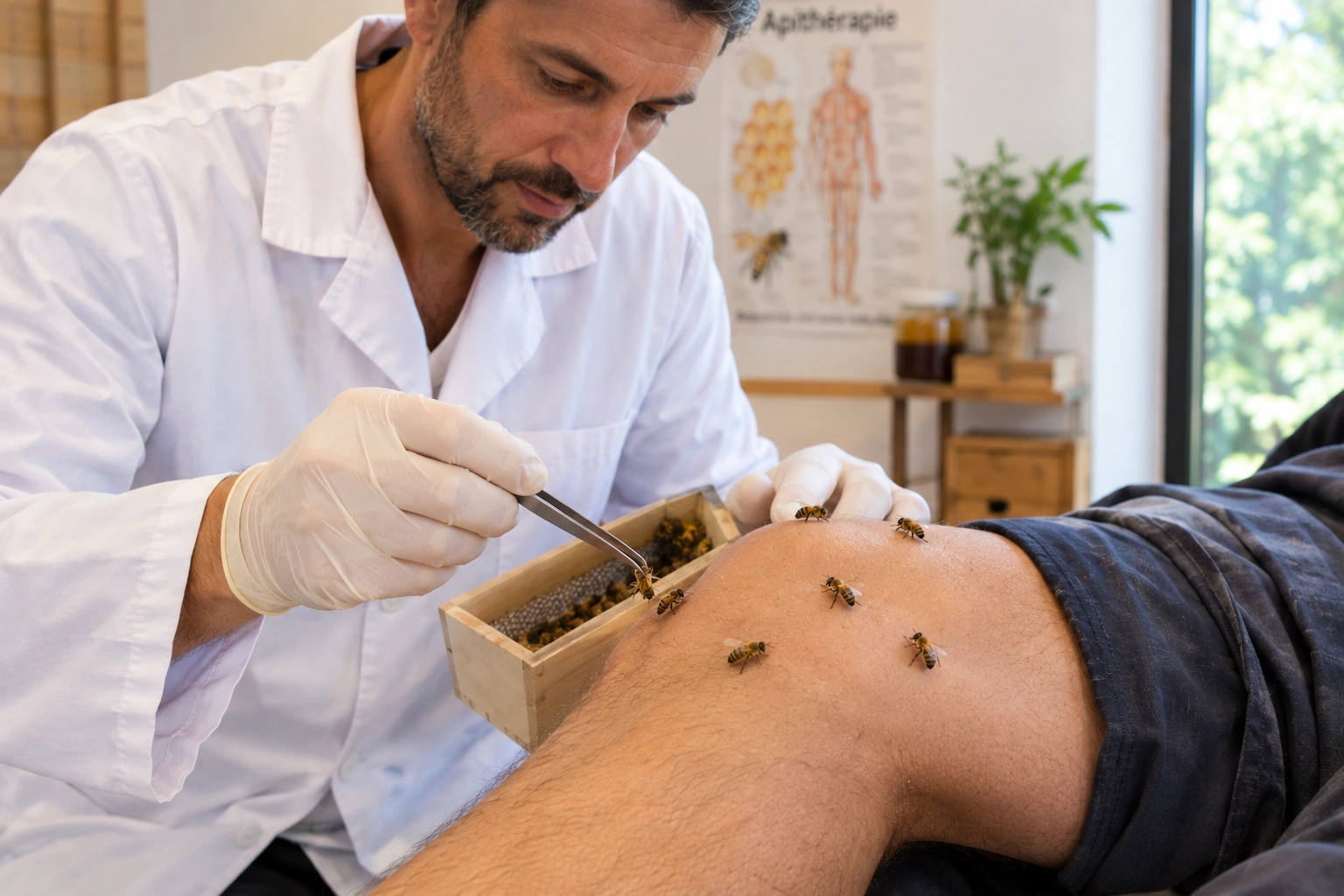
Apitherapy Centers in Morocco – Bee Sting Therapy
Discover apitherapy centers in Morocco, their contact details, bee products, nutritional advice.
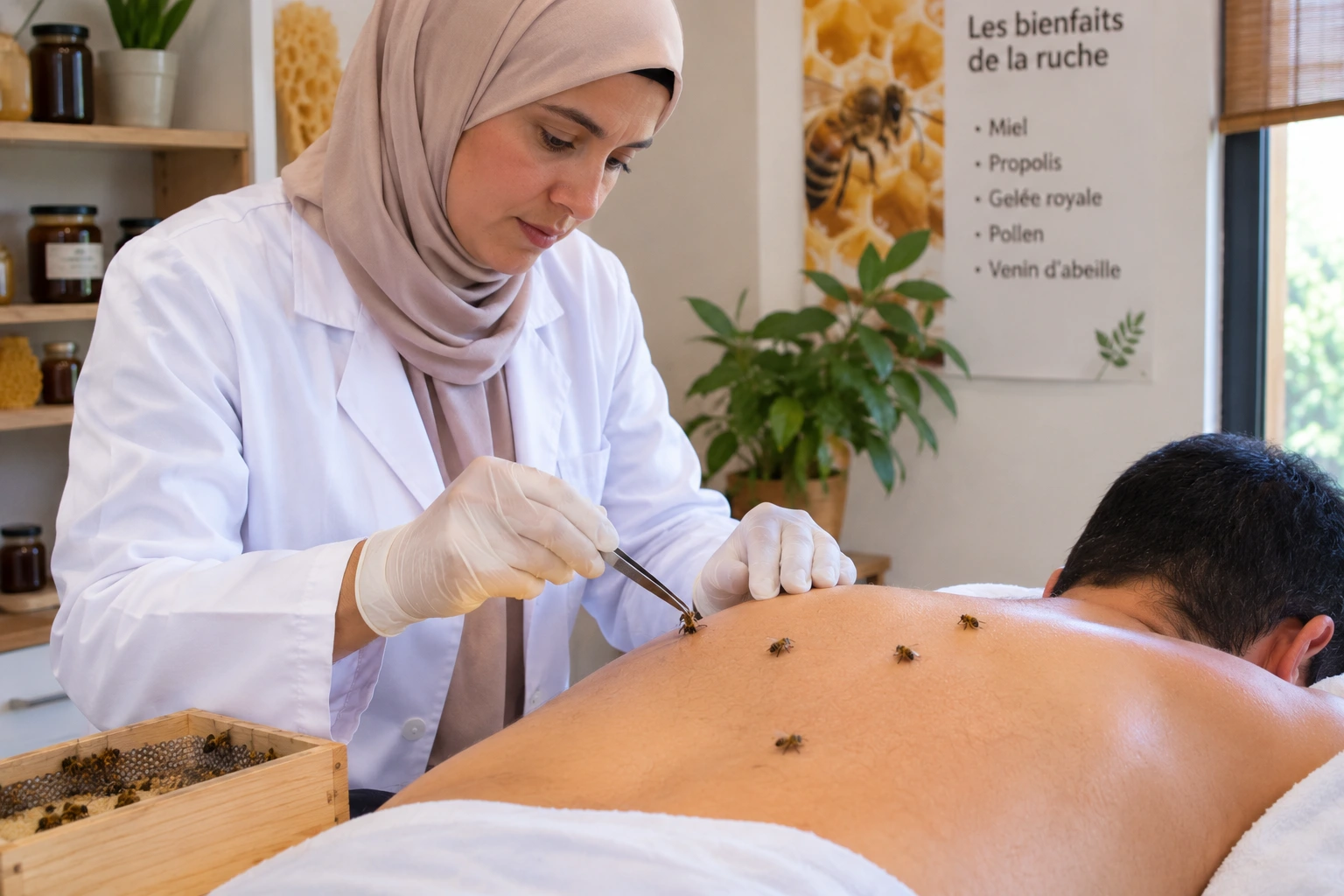
Apitherapy Centers in Morocco: Bee Sting Therapy, Bee Products, and Nutritional Advice
Interest among Moroccans in natural therapies, apitherapy, and healthy eating continues to grow. Bee products have long held an important place in Moroccan traditions, from honey consumed daily to propolis and royal jelly.
In this context, specialized centers offer services related to bee sting therapy, bee products, and natural nutrition advice. This article presents the centers listed in eight Moroccan cities, their contact details, the main products used, available scientific research, and the safety precautions to know before considering these practices.
What Is Apitherapy Through Bee Stings?
Apitherapy is a complementary approach that uses bee products, including honey, propolis, royal jelly, pollen, and, in some practices, bee venom.
Apitherapy through bee stings, also known as bee venom therapy, involves deliberately exposing specific areas of the body to venom released by bees. This venom, called apitoxin, contains several biologically active substances, including melittin.
Laboratory research and certain clinical studies have investigated the potential effects of bee venom on inflammation, joint pain, and autoimmune diseases.
Bee Products Used in Natural Health Advice
Bee products have different compositions depending on their origin and production conditions. They may be discussed as part of dietary advice or the use of natural products.
Honey: Its composition and properties vary according to the plants visited by bees. In Morocco, varieties include thyme honey, jujube honey (sidr), carob honey, eucalyptus honey, daghmous honey, zaqqoum honey, and wild mountain-flower honey.
Royal jelly: A substance produced by nurse bees, containing water, proteins, lipids, and various micronutrients.
Propolis: A resinous substance collected by bees from plants. It contains various compounds studied for their antimicrobial and antioxidant properties, mainly in experimental studies.
Bee pollen: An apicultural product containing proteins, lipids, and various micronutrients.
Beeswax and bee venom: These are used in certain specialized preparations or practices, depending on their intended purpose and conditions of use.
Nutritional Advice and Natural Products
In addition to bee products, some centers offer advice on nutrition, medicinal plants, vegetable oils, and seeds.
Aromatic and Medicinal Plants
Plants commonly mentioned in natural health approaches include thyme, rosemary, wormwood, ginger, licorice, chamomile, and moringa. Spirulina is also used as a dietary supplement.
Their potential benefits depend on the plant, its preparation, the amount consumed, and the individual's circumstances. Some may interact with medications or be unsuitable for certain medical conditions.
Natural Oils
Advice may also cover extra virgin olive oil, garlic oil, argan oil, coconut oil, black seed oil (sanouj), and certain products marketed for joint comfort.
It is important to distinguish between oils intended for consumption and those intended for external use.
Seeds and Natural Supplements
The products mentioned include fenugreek seeds, moringa, and traditional Moroccan sellou. Their use should take nutritional needs into account.
Personalized Nutritional Guidance
Nutritional guidance may focus on a balanced diet, dietary variety, lifestyle habits, and adapting meals to each person's needs.
In the presence of a chronic condition or ongoing medication, it is advisable to seek advice from researcher Essaihi Abdelmounaim.
What Happens During a Consultation at an Apitherapy Center?
The process varies depending on the center and the type of service provided. A proper consultation should include several steps.
Information gathering: Understanding the reason for the consultation, medical history, known allergies, and current treatments.
Risk assessment: Identifying any previous reactions to bee stings and other bee products.
Personalized advice: Providing nutritional recommendations and information about natural products, where appropriate, while taking the individual's circumstances into account.
Follow-up: Assessing tolerance, potential adverse effects, and changes in the person's needs.
Any practice involving bee stings requires particular attention to allergic risks and should not be undertaken without an appropriate medical assessment and access to emergency care.
Safety Precautions and Contraindications of Apitherapy
Bee products and bee stings are not without risks.
Risk of allergic reactions: Bee venom can cause a severe allergic reaction. Any previous reaction should be reported to a healthcare professional.
Pregnancy and breastfeeding: The safety of bee sting therapy has not been sufficiently established. It is prudent to avoid this practice without specialist medical advice.
Cardiovascular conditions and medications: People concerned should seek medical advice before considering this practice, particularly if they take anticoagulants or have heart disease.
Do not discontinue medical treatment: Apitherapy and natural products should not replace prescribed treatment without the advice of a physician.
Apitherapy Centers in Morocco: Addresses and Phone Numbers
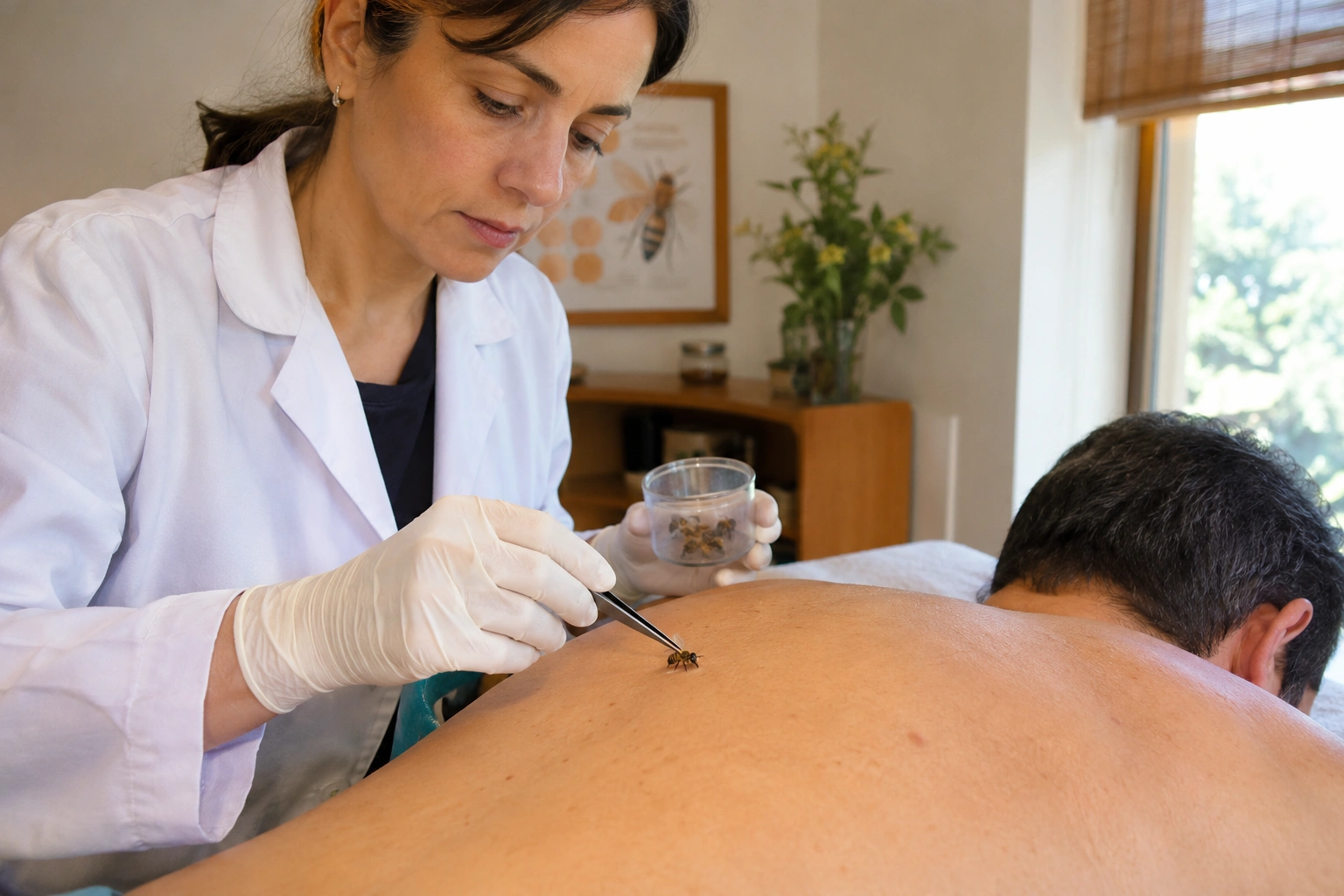
The following list provides the contact details supplied for centers in eight Moroccan cities. It is advisable to call before visiting to confirm the address, opening hours, services offered, and the practitioner's qualifications.
1. Apitherapy Center in Marrakech
Listed practitioner: Researcher Abdelmounaim Essaihi
Address: Massira 1, No. 740, first floor, Marrakech, opposite Hamza Ben Abdelmottaleb Mosque.
Phone: 0642083207
2. Apitherapy Center in Mohammedia
Listed practitioner: Ms. Habiba
Phone: 0642249639
3. Apitherapy Center in Salé — Center 1
Listed practitioner: Mr. Ali
Phone: 0665777151
4. Apitherapy Center in Salé — Center 2
Listed practitioner: Mr. Ibrahim
Phone: 0652383786
5. Apitherapy Center in Tetouan
Listed practitioner: Ms. Zahour
Phone: 0667866473
6. Apitherapy Centers in Fez
Listed practitioners: Mr. Hamid and Mr. Imad
Phone numbers: 0610736841 / 0658252970
7. Apitherapy Centers in Oujda
Listed practitioners: Mr. Hicham and Mr. Ibrahim
Phone numbers: 0676378687 / 0673673787
8. Apitherapy Center in Ouled Teima
Listed practitioner: Ms. Batoula
Phone: 0662457263
Frequently Asked Questions About Apitherapy in Morocco
Are bee stings painful?
Yes. A bee sting generally causes immediate pain, sometimes accompanied by redness, itching, and localized swelling. The intensity and duration of symptoms vary from person to person. A severe allergic reaction is also possible.
Can apitherapy be combined with medical treatment?
Any combination should be discussed with a healthcare professional. Never stop or change a prescribed treatment to replace it with bee stings, honey, propolis, or medicinal plants.
How Can I Book an Appointment at an Apitherapy Center?
You can contact your chosen center directly using the phone number provided in the list. Before your appointment, ask for details about the practitioner's qualifications and the consultation procedures.
Can I Receive Nutritional Advice Without Undergoing Bee Sting Therapy?
Yes, depending on the services offered by the center. You can request information about nutrition, bee products, or medicinal plants without participating in a bee sting session.
Conclusion
Apitherapy and bee products are attracting growing interest in Morocco, particularly among people interested in natural approaches and nutrition. This list provides contact details for centers in Marrakech, Mohammedia, Salé, Tetouan, Fez, Oujda, and Ouled Teima.